About
An engineer from ISAE-SUPAERO and PhD in Machine Learning (Sorbonne University, 1996), Jean-Daniel Zucker is Senior Research Director (DRCE) at IRD and Deputy Director of UMI UMMISCO since January 2025 (Director 2014–2024). He is Professor of Computer Science at Sorbonne University and Paris Dauphine (PSL), and co-head of the Integromics group.
His research addresses artificial intelligence and machine learning, with a particular interest in representation learning, deep learning and abstraction mechanisms, in both supervised and unsupervised settings. It aims to develop methods for modeling and integrating complex data, notably biomedical data, to understand systems and support decision-making.
Application domains lie mainly in health and the life sciences (metagenomics, multi-omics data, physiological signals and biomedical natural language processing), as well as biodiversity and computational ecology.
Education
- Preparatory classes for the grandes écoles (CPGE, MPSI/MP), Lycée Louis-le-Grand, Paris (1980–1982)
- Engineering degree (Diplôme d'Ingénieur), ISAE-SUPAERO (1982–1985)
- MSc AI Applied to Medicine, Université Paris 5 (1985–1986)
- MSc AI, Sorbonne University (1991–1992)
- PhD in Machine Learning, Sorbonne University (1993–1996)
- HDR (Habilitation à Diriger des Recherches, accreditation to supervise doctoral research), Sorbonne University (2001)
Languages
Citations per year (Google Scholar)
Research
Machine Learning & Abstraction
Inductive learning, representation changes, multiple-instance classification, interpretable scoring systems, biomedical NLP (AliBERT), interpretable deep learning.
Multi-Agent & Complex Systems
Agent-based modeling and simulation, GAMA platform, multi-scale modeling, crowd evacuation, environmental decision support, ecosystems.
Metagenomics & Gut Microbiota
Human gut microbiome, multi-omics integration, obesity, type 2 diabetes, cardiometabolic diseases, bariatric surgery, deep learning for metagenomics.
Precision Medicine
Diabetes remission prediction (Advanced-DiaRem score), patient stratification, bioinformatics, pharmacovigilance, cardiology (ECG + deep learning).
Publications
Loading publications…
Books
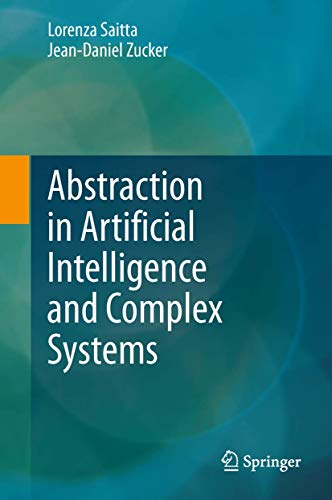
A unified formal theory of abstraction in AI: problem reformulation, representation changes, approximation. Draws on 30+ years of research by both authors. 174+ citations.
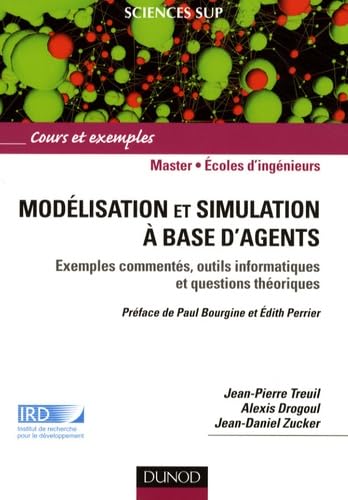
Reference textbook on agent-based modeling and simulation: commented examples, computational tools, and theoretical foundations. 200+ citations.
PhD Supervision
Current PhD Students (6)
Multimodal deep learning approach for predicting musculoskeletal disorders from contextual work situation analysis.
Beyond automated systematic literature review (ASLR) through NLP and large language models (LLMs).
Deep learning characterisation of bacterial strains involved in the deterioration of cardiometabolic diseases.
JUNOM — digital twin for seabirds: deep learning models for climate change impact scenarios.
Deep learning for classification of environmental plant DNA sequences.
Interpretable deep learning for multi-source biomarker detection and patient stratification.
| Period | Student | Thesis & Current Position |
|---|---|---|
| 1997–2001 | Sébastien Mustière | Machine Learning for Cartographic GeneralizationResearcher, LaSTIG, IGN & ENSG (Paris) |
| 1998–2001 | Yann Chevaleyre | Multiple-instance ML for Inductive Logic ProgrammingFull Professor, LAMSADE, Paris Dauphine-PSL |
| 1998–2002 | Laurent Breton | Computer Aided Discovery in Granular Physics: The GranuLabIndustry Project Leader |
| 1998–2002 | Mélanie Courtine | Abstraction for Unsupervised ML of structural data in functional genomicsAssociate Professor, Université Paris 13 |
| 1998–2002 | Nicolas Bredeche | Multiple-Representation Learning to anchor a lexicon in robot perceptionFull Professor, ISIR, Sorbonne University |
| 2001–2005 | David Sheeren | Supervised Learning for representation differences in Geographic DatabasesFull Professor, DYNAFOR, INP-AgroToulouse/ENSAT |
| 2003–2006 | Blaise Hanczar | Compression-based feature selection for ML from DNA Chips dataFull Professor, IBISC, Université d'Évry (Paris-Saclay) |
| 2004–2008 | Corneliu Henegar | Unsupervised Learning for Annotation of Regulation Networks from DNA ChipsAssociate Professor, UPEC & Scripps Research, La Jolla, CA |
| 2004–2009 | Aydano Machado | Adaptative Transfer in Reinforcement Learning for tactical schemas simulationFull Professor, IC, UFAL, Maceió, Brazil |
| 2005–2009 | Ramzi Temani | Combining Data Sources for ML: weight loss prediction in obesityResearch Scientist, Sidra Medical and Research Center |
| 2004–2009 | Ariel Bennis | Computer Aided Scientific Discovery from Post-Genomic and Clinical DataPatent Specialist, Israel |
| 2007–2011 | Edi Prifti | Integrative Bioinformatics for Physiopathological Gene Targets in Complex DiseasesResearcher (IR), IRD UMMISCO / INSERM Nutriomics / Sorbonne |
| 2007–2011 | Sajjad Ahmed Nadeem | Classification with reject-option for transcriptomic decision supportAssociate Professor, Pakistan |
| 2006–2011 | Tran Nguyen Minh Thu | Association Rules Abstraction for Recommendation Systems from temporal preferencesPost-doc & Lecturer, Can Tho University, Vietnam |
| 2010–2013 | Meriem Abdennour | ML for diagnosis of adipose tissue and hepatic pathologies in obesityResearch Engineer |
| 2010–2014 | Thi Ngoc Anh | Dynamic Multilevel Modeling for Decision Support in rescue simulationLecturer, USTH, Hanoi |
| 2011–2015 | David Dernoncourt | Stability of Feature Selection in ML: obesity targets from postgenomic data— |
| 2010–2015 | Inès Hassoumi | Coupling Multi-agent Models for complex systems: urban expansion in Tunisia— |
| 2011–2016 | Ho The Nhan | Parallelized Learning for high-speed multi-agent simulations— |
| 2013–2016 | Le Van Minh | ML for optimization in Multi-Agent DSS: Tsunami evacuation sign placement— |
| 2015–2018 | Nguyen Thanh Hai | Deep learning of Metagenomics DataResearcher, Can Tho University, Vietnam |
| 2015–2020 | Dao Minh Quang | Integrative High-Performance BigData mining: metagenomics and metabolomics— |
| 2017–2021 | Maxence Queyrel | Sub-group Discovery and Deep Learning to integrate big Omics Biomedical DataML Engineer, Valeo (Paris) |
| 2020–2023 | Ahmad Fall | Explainability and Interpretability in Deep Learning for Cardiometabolic DiseasesResearch Engineer, IRD |
| 2020–2024 | Théophile Bayet | Inclusivity of deep learning computer vision systems for the Global SouthPost-doctoral researcher, Sorbonne University / LIP6 |
| 2021–2024 | Alex Lence | Improving Torsades de Pointes risk prediction: generative models for synthetic ECGsResearch Engineer, IRD/UMMISCO |
| 2021–2025 | Gaspar Roy | End-to-end Transformer architecture for disease prediction from metagenomics dataPost-doctoral researcher, IRD/UMMISCO |
Projects & Grants
End-to-end deep learning for precision medicine through metagenomics and cost-sensitive multi-omics data integration. Unique cohort of 2,000 deeply phenotyped individuals.
Metagenomics and Systems Medicine of Cardiometabolic Diseases (HEALTH-F4-2012-305312). 14 partners, 6 countries.
EU contribution: €11,999,992 · Total: €20,387,421
Exploring by Simulation Cities Awareness on Population Evacuation.
€212,000 (IRD)
Generation of synthetic, localized, socially structured populations for social simulation. Application: tsunami evacuation in Da Nang, Vietnam.
Multi-scale simulation platform for ecology and environmental sciences.
Combining learning methods and biostatistics for the study of genetic polymorphisms in obesity (with Sandrine Dudoit, UC Berkeley).
Advanced Software Engineering Environment Logistics Framework (n°1520). 40+ participants, 8 European countries.
ECU 6 million
Awards & Honours
Collective award for Le Chatelier et al., "Richness of human gut microbiome correlates with metabolic markers", Nature 500, 2013 (5,000+ citations).
Winner of the Interface competition between APHP hospitals and IHU ICAN.
ObeLinks project — combining ML methods and biostatistics for the study of genetic polymorphisms in obesity (with Sandrine Dudoit, UC Berkeley).
Under the patronage of the CNRS. CD-ROM Matteo Ricci — Chinese Characters, with Joël Bellassen (Univ. Paris VII).
International Conference on Computers in Education, Taipei, Taiwan. "Machine Learning Contributions to a Guided Discovery Tutoring Environment for Chinese Characters."